
The Cheap Trick To Plate Mounting
Posted by Logan on 18th May 2026
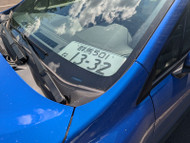
Buying a new car in a state with a front plate requirement creates one of those low-stakes problems that ends up consuming a surprising amount of mental energy. You don't want to drill into a clean OEM bumper. The dealer wants to slap on the bracket because that's what they do. Somewhere in that gap, you remember seeing a guy with the plate just sitting up on his dashboard behind the windshield, and you think, well, that seems easier.
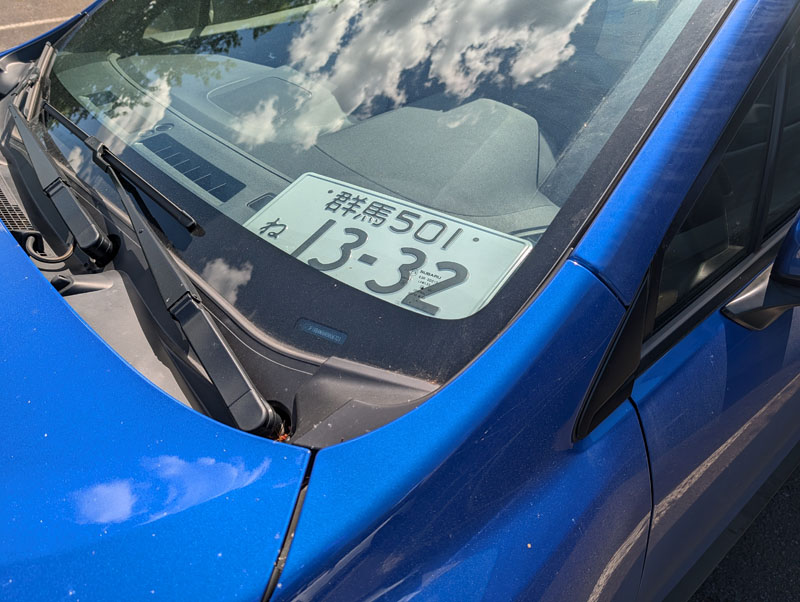
It is easier. That's about all it has going for it. The dashboard tuck is one of those workarounds that feels clever for about thirty seconds and then quietly costs you in three ways: legally, physically, and on the actual job the plate is supposed to do. It's worth understanding what you're getting into before you commit to it.
The Legal Reality
The most common misconception about front plate laws is that visibility is the bar. If you can see the plate through the windshield, the thinking goes, you're meeting the spirit of the law. The actual statutes disagree.
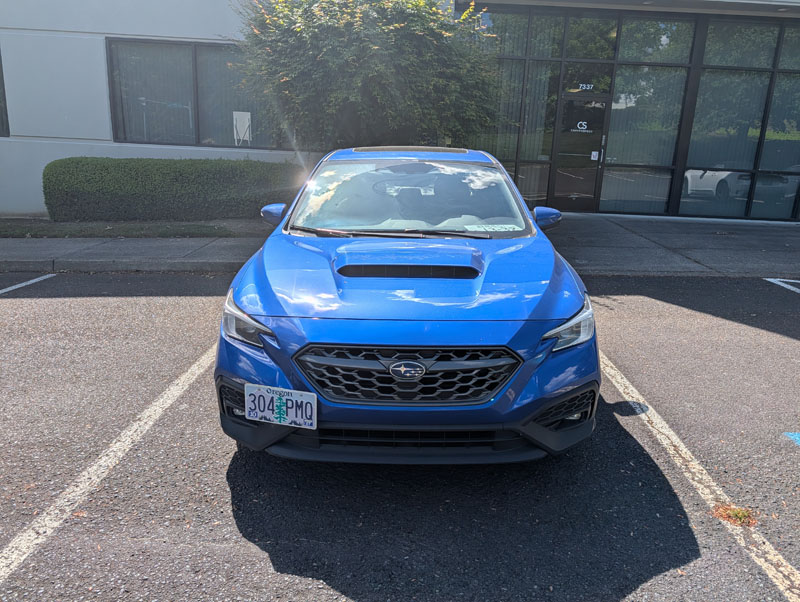
In most states that mandate a front plate, the language specifies that the plate has to be securely fastened to the front of the vehicle, mounted horizontally, kept within a defined height range off the ground, and unobstructed. The common thread is exterior, fastened, horizontal, visible from a defined distance.
A plate sitting on the dashboard fails several of those at once. It isn't fastened. It isn't on the exterior. It usually isn't horizontal because dashboards aren't flat. From the perspective of an officer or an automated reader, it's effectively no plate at all, which means a dashboard tuck gets treated about the same way as a missing plate. A fix-it ticket at minimum, and a perfectly good reason for an officer to pull you over in the first place. The fact that you can technically read the numbers from outside the windshield doesn't enter into the equation.
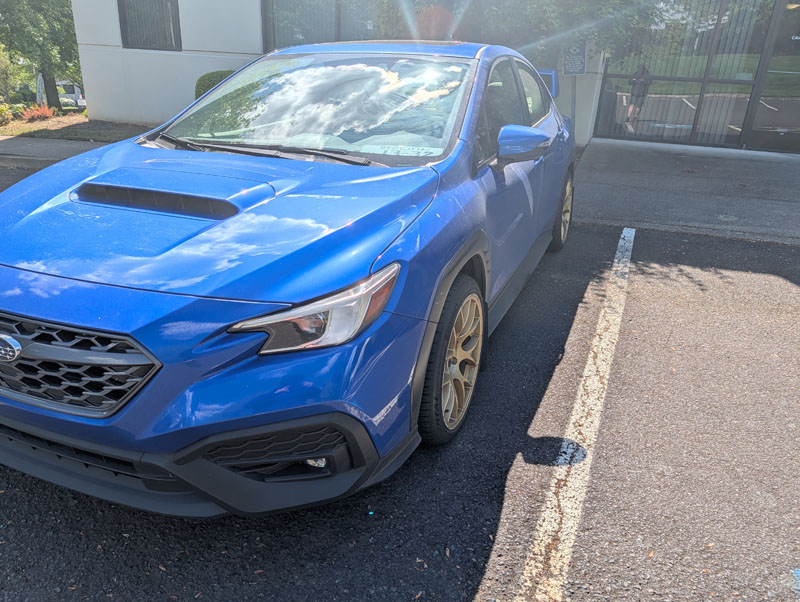
The other thing this runs into is inspection. A few states cross-check plate mounting at registration renewal or during state safety inspections, and a vehicle that's been driving around with the plate inside the cabin can flag for a compliance issue independent of any traffic stop. So even if you've never been pulled over for it, you'll usually end up dealing with the problem eventually anyway. Just on the DMV's schedule instead of yours.
Where Front Plates Are Required
At the time of writing, twenty-eight states plus the District of Columbia still require a front plate in 2026. That covers most of the country geographically: nearly all of the Northeast (every state from Maine down through New Jersey, with Pennsylvania the lone exception), most of the Upper Midwest (Illinois, Wisconsin, Minnesota, Iowa, Missouri, Nebraska, North Dakota, South Dakota), and most of the West and Mountain West (California, Oregon, Washington, Nevada, Idaho, Montana, Wyoming, Hawaii, and Colorado). Add Texas, Virginia, Maryland, and DC, and you have the full list.
The rear-only states are mostly clustered through the Southeast (Alabama, Florida, Georgia, Mississippi, the Carolinas, Tennessee, Kentucky, Louisiana, Arkansas, West Virginia), with Arizona, New Mexico, Oklahoma, Kansas, Indiana, Michigan, Pennsylvania, Delaware, and Alaska rounding out the group.
Two recent changes are worth flagging. Ohio dropped its front plate requirement in July 2020 after more than a century of two-plate registration, citing aerodynamics, the proliferation of front-bumper sensors and cameras, and aesthetics. Utah followed in January 2025. Both bills passed over objections from state law enforcement, and similar bills surface periodically in legislatures from Texas to Washington. For the moment, no other state has flipped, and 2026 looks like the new equilibrium.
Where the laws actually differ from each other is in the mounting specifics. California's Vehicle Code §5201 caps front plate height at 60 inches off the ground. Idaho's §49-428 sets a 12-inch floor and requires the plate be "in a place and position to be clearly visible." New Hampshire writes its requirement as a window between roughly 12 and 48 inches. Texas, New York, Illinois, New Jersey, and Massachusetts all use variations of "securely fastened to the front of the vehicle in a horizontal position, clearly legible from a stated distance." The common denominator is "securely fastened," and a plate floating on the dashboard doesn't satisfy any reasonable definition of fastened.
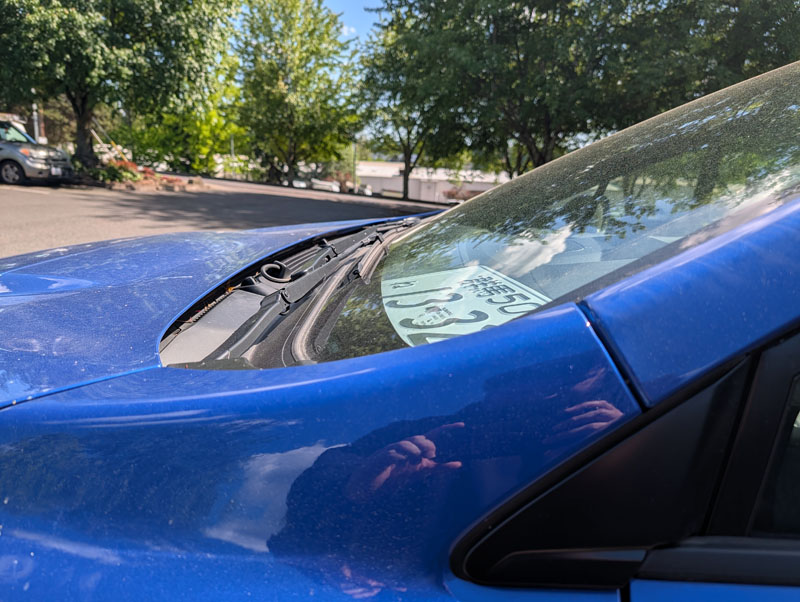
The Safety Issue
This is the part that doesn't get talked about enough. A standard US license plate is stamped aluminum, weighs around four ounces, and has reasonably sharp corners. Sitting loose on a dashboard, there's nothing keeping it in place except the slope of the dash and a little bit of friction.
Normal driving will eventually walk it around. A panic stop will slingshot it. In a real impact it becomes one more loose object inside the cabin, going wherever inertia decides to take it. Loose objects in the cabin are a known concern for a reason, and a stamped metal rectangle with corners is meaningfully worse than a coffee cup or a phone.
There's a related problem most drivers haven't really thought through, which is that the passenger airbag in almost every modern vehicle deploys upward and outward from the top of the dash. Anything resting on that surface gets caught up in the deployment. Passenger airbags aren't subtle when they go off. They can launch an unsecured cup of coffee into the headliner. A plate sitting in front of one becomes part of the kinetic event, and the geometry isn't friendly. It is not a scenario you want to find yourself running.
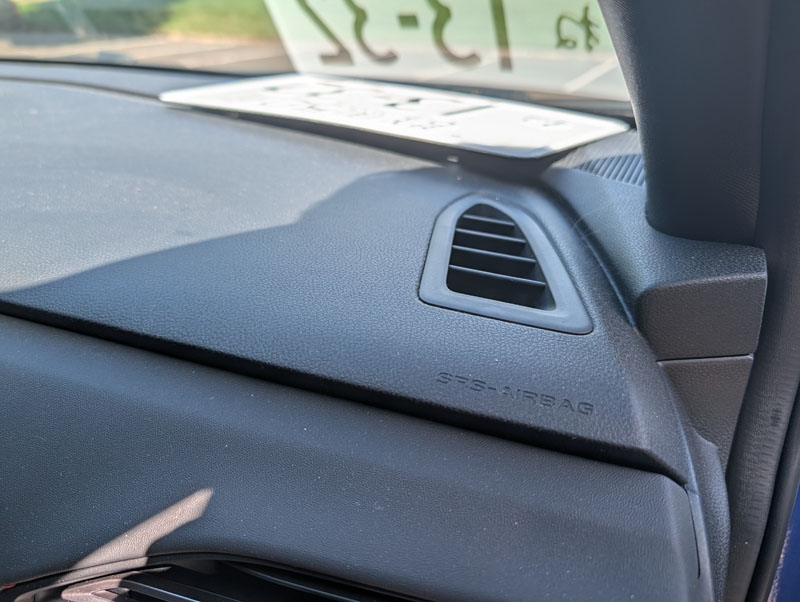
What the Cameras See
Set aside the law and the airbag question for a minute, and the windshield tuck still fails the basic functional test. The whole reason your state requires a front plate in the first place is so that the plate can be read. By patrol officers, by toll readers, by parking enforcement, and increasingly by ALPR systems scanning everything that drives past them.
None of those readers are looking up through a windshield. They are calibrated for plates at bumper height, in roughly direct light, oriented vertically, with no glass in the way. A plate behind a windshield has to contend with the rake of the glass (often 60 degrees or steeper on modern sport sedans and coupes), the factory UV interlayer in the upper portion of the windshield, the angle of the dash, and whatever reflection the sky is throwing at the front of the car that minute.
The practical result is a plate that looks perfectly legible from the driver's seat and is unreadable from anywhere a camera or an officer is actually positioned. Toll-by-plate systems will fail to bill the right account. Patrol cars running plate scans will skip the vehicle entirely, or flag it as having no detectable plate, which is its own kind of problem. The plate is doing none of the work it's there to do, while still creating all of the legal and physical liabilities of being inside the cabin.
A No-Drill Way Out
The reason the windshield tuck even exists as a strategy is that the obvious alternatives have historically been bad. Drilling holes into a painted OEM bumper is permanent and visually rough on a lot of the cars that most of our customers are driving. Adhesive brackets either pull paint off when they finally release or detach in the first hot summer. Neither is what an enthusiast has in mind when they're trying to keep the front of the car looking the way it left the factory.
The option that actually solves the problem is mounting the plate to the front tow hook receiver. Almost every modern vehicle has one, usually hidden behind a small pop-out panel in the front bumper, and the threaded socket behind it is structural. It is literally the point on the car the manufacturer expects you to use to winch the vehicle onto a flatbed. Mounting hardware that threads into that receiver puts the plate exactly where the law wants it, at the right height, in the right orientation, on the exterior, with no permanent modifications anywhere on the car. Pull the mount back off and the bumper looks the way it did the day you took delivery.

This is the problem we built our Platypus License Plate Mount around. It threads into the factory tow receiver or attaches to the grille on a long and growing list of vehicles, installs in a few minutes with hand tools, and removes just as quickly. We've been adding fitments for years, and if your specific vehicle isn't on the list yet, that's usually a quick email away from being one.
If you've been quietly putting off dealing with your front plate because every option felt like a compromise, the tow hook route is the one that isn't.
Shop Now